
Your Hospital Plan: What You Can Decide About Labor, Delivery, and Time With Your Baby
Your Hospital Stay Is Something You Get to Plan For
When you are pregnant and creating an adoption hospital plan, one of the most common fears is losing control the moment you walk through the hospital doors. Many expectant mothers picture labor and delivery as a blur of decisions made by other people. The truth is that a hospital plan for birth mothers puts many of those decisions back in your hands, written down ahead of time and honored by a trusted agency, so you are not making them in the middle of labor.
A hospital plan is simply your written list of preferences for labor, delivery, and recovery
An adoption delivery plan is not a legal document. It is a personal record of what you want your hospital experience to look like, from who is in the room to how much time you spend with your baby afterward. Think of it as a way of telling your story to the people who will be caring for you, before you ever meet them.
Making decisions ahead of time means fewer choices to make while you are exhausted
Labor and delivery is physically and emotionally demanding. Deciding things like who can visit or whether you want to hold your baby right after birth, while you are exhausted and recovering, adds pressure you do not need. Working through those choices in advance, with support, means you can simply follow your own plan when the day comes.
Nothing in your hospital plan locks you into anything
Your plan reflects how you feel right now, and how you feel is allowed to change. You can adjust any part of your plan at any point, including during labor itself. Choosing adoption does not mean giving up your voice in what happens at the hospital.
Your adoption specialist shares your plan so you are not explaining it to every new nurse
One of the most exhausting parts of a hospital stay can be repeating your wishes to every new nurse who walks in after a shift change. Your adoption specialist can communicate your plan to your hospital’s care team in advance, so the people supporting you already understand your preferences, and are sensitive to your adoption decision before you arrive.
Decisions You Can Make About Labor and Delivery
If you are wondering what happens at the hospital when you choose adoption, the honest answer is that most of it still belongs to you.
Who you want in the room with you, and who you would rather not have there
You decide who is present for labor and delivery. That might be a parent, a friend, your adoption specialist, or even the adoptive family you chose. Over A Guardian Angel Adoptions twenty three years as an agency, we have honored each mother’s decision about her hospital room experience. Who can be in the delivery room for an adoption is entirely your choice to make and communicate ahead of time.
Whether the adoptive family is at the hospital, in the waiting area, or called afterward
Does the adoptive family come to the hospital? That depends entirely on what you want. Some expectant mothers want the adoptive family nearby from the start. Others prefer they wait until after delivery, or are simply notified once the baby has arrived. There is no right answer, only the one that feels right to you.
Your preferences for pain management, delivery, and privacy
Your medical choices around pain management and delivery are made between you and your medical team, the same as they would be for any birth. Placing your baby for adoption does not change your right to make informed decisions about your own body and care.
What hospital staff should say if someone asks about you or calls the room
You can ask hospital staff and your adoption specialist to handle calls, visitors, or questions about your situation in a way that protects your privacy. Many hospitals are able to accommodate specific privacy requests, though it is worth confirming with your care team what is available at your particular hospital.
How you want to be spoken to and referred to by the care team
You can also let your care team know how you would like to be addressed and how you would like your situation described, so the language used around you reflects your own words and your own experience, not assumptions. For example, some women want to be called the birth mother as soon as they arrive, and some prefer mother. You are both, and you decide what feels comfortable.
Deciding How You Want to Spend Time With Your Baby
Spending time with your baby before placement is one of the most personal choices in your entire plan, and it belongs to you alone.
Holding, feeding, and having time alone with your baby are your choices to make
Can I hold my baby if I am placing for adoption? Yes. You can decide whether you want to hold your baby, feed your baby, or spend time alone together after delivery. These moments are yours to shape however feels right to you.
Wanting little or no time with your baby does not mean you love your baby less
Some birth mothers want as much time as possible with their baby at the hospital. Others feel that less time, or none at all, is what they need emotionally. Neither choice says anything about how much you love your child. Both are valid, and your adoption specialist can help you think through what feels manageable for you.
Naming your baby and what goes on the original birth certificate
Naming your baby is part of adoption and the birth certificate process, and it is one of the choices you can make with the family or on your own. You can choose your baby’s name, and that name is recorded on the original birth certificate. It is important to know that once the adoption is legally finalized, a new birth certificate is issued that lists the adoptive parents in place of the birth parents, and the adoptive parents have the legal right to keep the name you chose or change it. Most adoptive families do keep the name a birth mother chooses, often as a middle name if not the first, but this is ultimately their decision to make once the adoption is complete.
Photos, footprints, hospital bracelets, and other keepsakes you may want later
Keepsakes like photos, footprints, a lock of hair, or a hospital bracelet often become meaningful later, even if you are not certain at the moment whether you will want them. Many birth mothers choose to have these captured just in case, since they can always decide later whether to keep them. A Guardian Angel Adoptions also offers a free photography session at the hospital so you can keep these moments with your baby forever.
Whether the adoptive family meets the baby at the hospital or after discharge
Just as with your own hospital experience, you decide whether and when the adoptive family meets your baby. That can happen at the hospital, shortly after discharge, or in whatever way feels most comfortable to you.
What to Expect Before You Leave the Hospital
Understanding a birth mother’s hospital stay and what to expect can make the entire experience feel less uncertain.
How long a hospital stay usually lasts and what early recovery feels like
Hospital stays after delivery typically last one to two days, though this can vary based on your delivery and recovery. Early recovery often includes physical rest, monitoring, and support from both your medical team and your adoption specialist.
When adoption paperwork is signed, and why nothing is signed before your baby is born
One of the most common questions expectant mothers ask is when do you sign adoption paperwork after birth. Nothing can be signed before your baby is born. In the state of Utah for example, a birth mother cannot sign relinquishment or consent papers until at least 24 hours after delivery and must be free of any medication that was used for pain during delivery. The signing must take place voluntarily, in front of a an authorized designee. No one, including your adoption specialist, can make this decision for you or rush you into signing before you are ready. Each state has their own time frame for signing after delivery.
Who to ask when you need privacy, more time, or a break from visitors
If at any point you need privacy, more time, or a break from visitors, you can ask your nurse or your adoption specialist to help make that happen. Advocating for what you need is part of what your care team and your specialist are there for.
What happens if you feel differently once your baby is here
It is normal for feelings to shift once your baby has arrived, especially as hormones begin to shift. Until relinquishment papers are signed, you retain full parental rights and the ability to change your plan. A social worker can talk through what parenting would look like and also review your previous decision to place your baby, without judgment, at any point in the process.
Leaving the hospital: what those first hours home often feel like
The hours after leaving the hospital can bring a mix of emotions, whether you are going home with your baby or without. Support does not end at discharge, and having someone to talk to in those first days can make a meaningful difference.
You Do Not Have to Build This Plan Alone
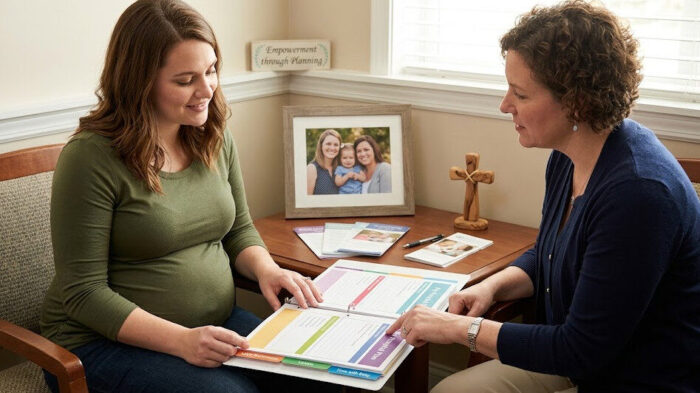
Your adoption specialist can walk through every choice with you, one at a time
Building an adoption hospital plan can feel overwhelming if you try to think through every decision at once. Your adoption specialist can walk through each choice with you individually, at whatever pace feels comfortable.
You can change your hospital plan at any point, including during labor
Your plan is not permanent until you decide it is. You can revise any part of it, even while you are in labor, and your care team will be informed of any updates.
How AGAA communicates your plan to the hospital and to the adoptive family
At AGAA, your adoption specialist shares your hospital plan directly with your hospital’s care team and, where relevant, with the adoptive family, so everyone understands your wishes without you having to repeat them during an already difficult time.
Support does not stop at discharge; care continues after you go home
Your relationship with your adoption specialist does not end when you leave the hospital. Continued support is available in the days, weeks, and months that follow, for however long you need it. A Guardian Angel Adoptions has a designated post placement department to help you navigate life after placement and your relationship with the family.
This day is yours, and your preferences deserve to be honored
This is your birth story, and your preferences deserve to be honored at every step. You do not have to navigate this decision or this day alone.
If you are creating an adoption plan and want help building your hospital plan, call 877-804-3704 or reach out through our Expectant Mothers Contact form (https://aguardianangel.com/contact-birthmothers/). We are here to walk every step of the way with you.